

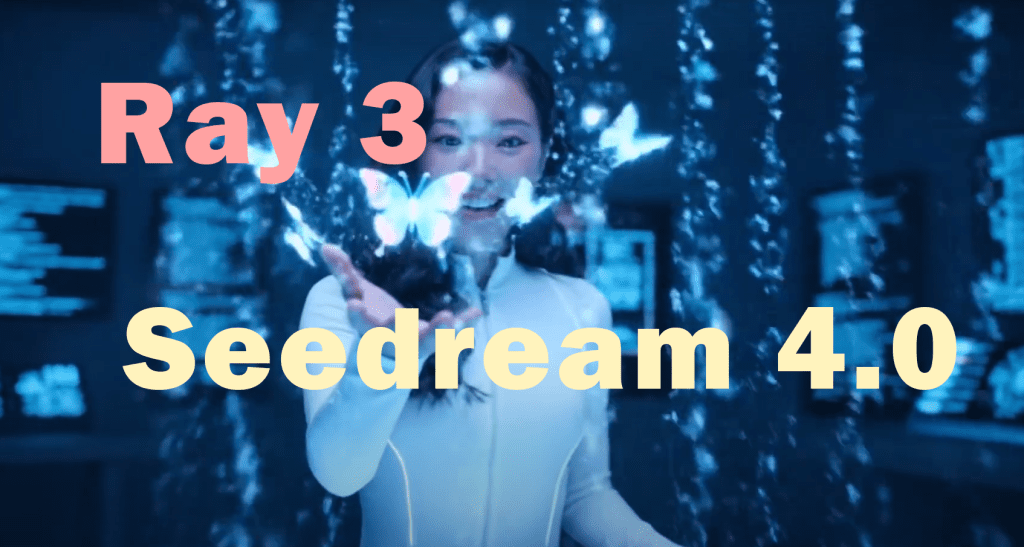

Artificial intelligence technologies are advancing at full speed. After models like Google Banana and Google Veo 3, two strong contenders have now entered the stage: Ray 3 by Luma AI and Seedream 4.0 by ByteDance.
Ray 3: A Reasoning Video Model
Ray 3 stands out as a “reasoning video model”, meaning it can think and plan before generating a video. Unlike traditional models, Ray 3 evaluates logical flow, adheres to physics, and ensures character consistency.
It also supports HDR (High Dynamic Range), enabling more realistic and dynamic results. Ray 3 is available through lumalabs.ai, where users can try it for free—though with some resolution limitations in the free version.
Seedream 4.0: ByteDance’s New Image Model
While Google Veo 3 shifted the balance, Seedream 4.0 raises the bar once again. Key features include:
- Up to 4K resolution with fast and consistent results,
- Style consistency with up to 6 reference images,
- Ability to generate 9 images at once,
- Natural language editing support,
- Strong accuracy in character and environment consistency.
Seedream 4.0 can currently be tested for free in two ways:
- Dreamina website (dreamina.capcut.com) → An independent platform connected to CapCut’s ecosystem. By signing up, users can generate images directly from here.
- LMArena → By navigating to “Battle” → “Direct Chat” → “Image” and selecting Seedream 4.
Both methods deliver quick results, and early tests show particularly strong performance in consistency and detail.